“Education is the most powerful weapon which you can use to change the world.”
Nelson Mandela
The Parkari Literacy Project (PLP) is one of the core activities of PCDP. The PLP is a community based literacy development project which provides education for Parkari children living in rural villages.
The PLP has the following aims:
Community Self-Help School Project
To establish self-help schools
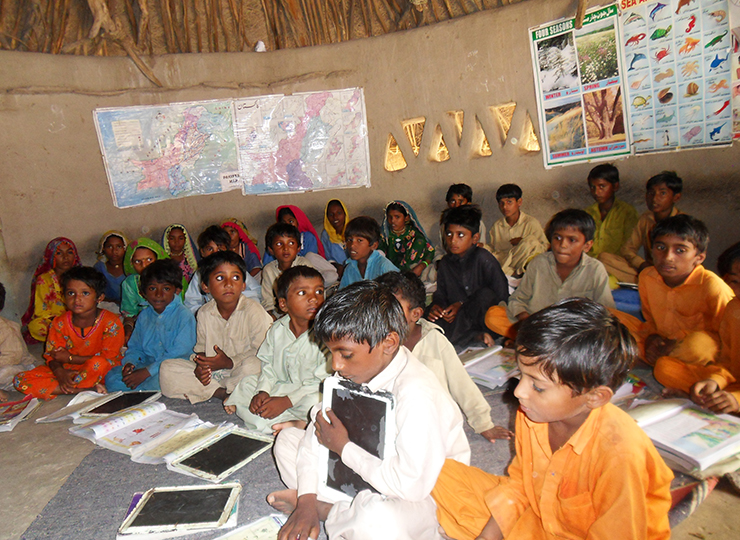
PCDP faces a growing demand for education from Parkari villages, as they see the advantages of communities where schools have already been established. Keeping in mind the need and requests from the community, over the life of this project, PCDP adopted the twofold strategy of establishing MLE schools and Self-help schools. To achieve this, PCDP provides teacher training, basic school equipment, educational books in Parkari for the initial education in mother tongue, and salaries for teachers, for only the first two years. After this period is completed, each community is then responsible for running and funding the schools themselves.
Secondary Education
To provide transition from primary to middle school
In an effort to provide educational opportunities beyond primary education, PCDP opened Middle schools, offering grades 6 to 8. Currently there is only one middle school in one village of the barrage area where children from other nearby primary schools continue secondary education. PCDP setup and equip secondary education facilities for villagebased primary plus classes with one or two further grades added where students will have opportunity to continue after primary grade 5 to grade 6, 7 and 8. PCDP trains the middle school teachers and the schools are equipped with appropriate materials, equipment and facilities.
Adult Education
To provide village-based education for adults
PLP provides training for adult education teachers so they can run Adult Education centres. Adult Education means that village people are able to have basic literacy skills. It not only builds the capacity of illiterate adults in reading and writing skills, but also fosters an awareness about how important education is for their children, including girls.
Adult education in their mother tongue is highly appreciated by Parkari adults. After being part of the adult literacy class, many adults have realized the importance of education for their children and started sending their children to school. Every year PCDP receives several applications from the community to setup adult literacy centres in their villages. To meet this growing need, PCDP offered to provide teacher training, information books etc., but only if the adult education centres were then set up and run by the communities themselves.
Multilingual Education (MLE) for Parkari Children
To use only mother tongue in the early stages of education
PLP uses Parkari, the mother tongue of the community, as the first language of education. This is highly respected at the local level. The main purpose of PLP’s Multilingual Education project is to teach using only people’s own mother tongue for the first 18 months in order to increase literacy among the community. Currently literacy in the Parkari community is barely 5%, compared to the national rate of 55%.
One of the basic principles used in PLP is the importance of beginning education in mother tongue. Children learn best in their mother tongue because they are fluent in it, which provides a safe and secure atmosphere when children first attend school. Mother tongue instruction also helps children to acquire basic concepts at grass root level. Use of mother tongue also gives children the best opportunity for self-expression, as it is several years before children can express their thoughts and ideas freely in a second language. The PLP pattern is to build a firm foundation of reading and writing in mother tongue, which then enables children to transfer these mother tongue literacy skills to Sindhi, Urdu and English at later stages in their education.
Studies have shown that when minority children have the opportunity to begin their academic work using their first language, they are academically more successful later on in education in other languages when compared with those who began their education in only their second language. PLP is proving very popular at both government and local level, because of the success of Parkari children exhibit when have begun their initial education in their mother tongue.
PLP therefore provides the Parkari community schools with locally written Parkari books and other educational materials, and locally produced cassettes. All these materials are in Parkari, and include culturally appropriate books for use in schools, information and charts for running workshops, teacher training materials and health materials.
For PLP trained school teachers to use the “Multi-strategy Method”
This means using two distinct ways to teach the children to read and write. The Workbook Track teaches children to become accurate and methodical readers, writers, thinkers, and problem solvers. The Storybook Track includes writing with fluency, comprehension using thematic story books, and writing about shared experiences. These activities teach children to become confident and creative readers, writers, thinkers, and problem solvers.
For PLP to run Teacher Training Workshops
for village teachers and their assistants. These workshops provide targeted training which prepares teachers to teach the initial Basic Education syllabus in mother tongue, and later on, the multi-lingual Primary Education syllabus.
“Each one Teach one” Youth Campaign
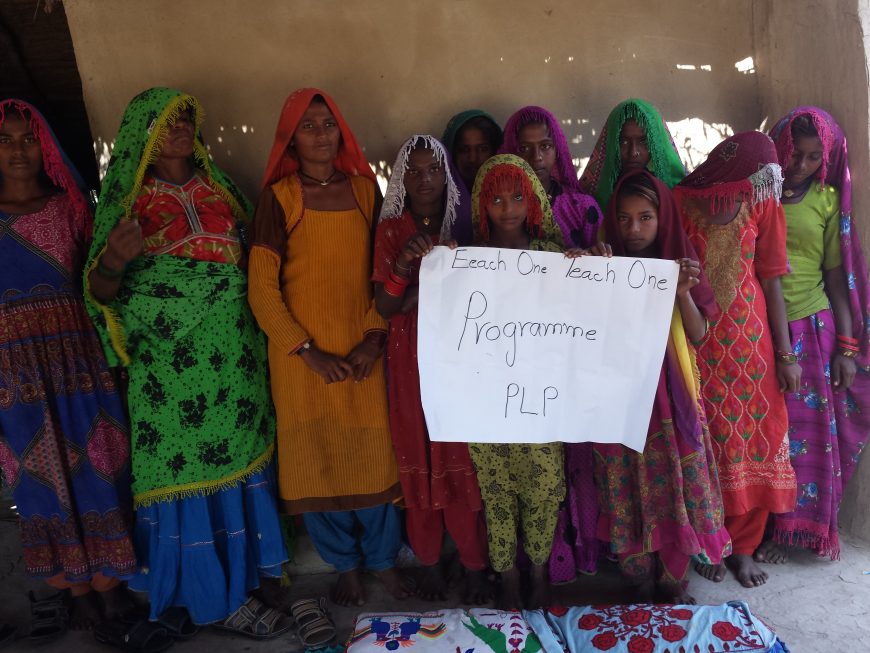
In order to encourage the Parkari literate youth to provide their volunteer services, the Parkari Literacy Project (PLP) organizes ‘Each one Teach one’ youth campaign. The purpose of this campaign is to promote volunteerism in rural youth and encourage them to provide basic literacy skills to illiterate people in their village. Each one Teach one is collaboration between the Parkari literate youth and the illiterate members of Parkari Community which offers the opportunity to learn and share knowledge. Each one Teach one youth campaign helps to make difference in the lives of those who are uneducated, semi-educated or illiterate.
“Sewing Skills Training”
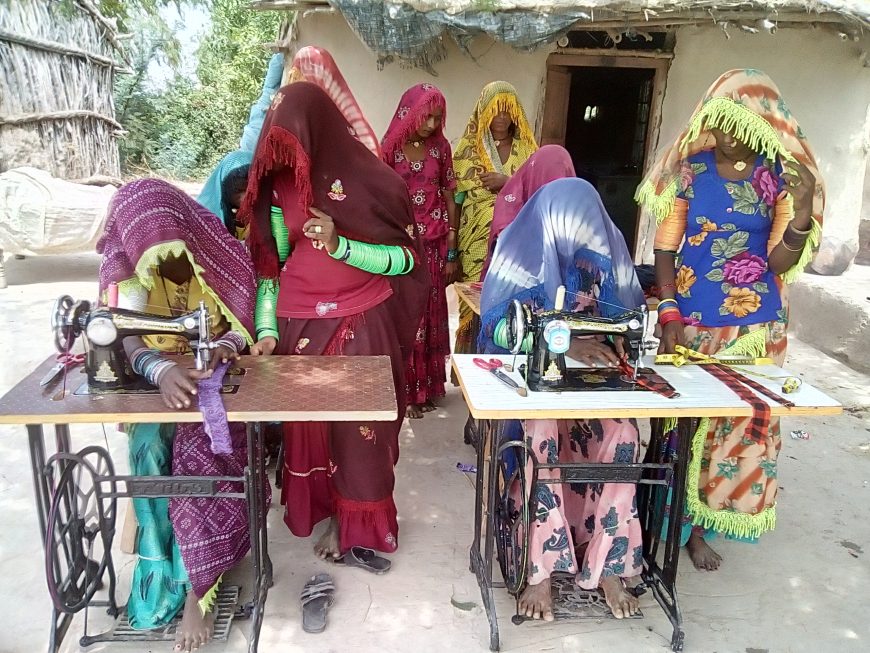
The sewing skills training focuses on rural men and women which enable them to learn tailoring skills using the treadle-operated sewing machines. PCDP establish village-based sewing centers with the provision of sewing machines along with wheels, wooden stools for students, cloth, scissors, and other necessary material. PCDP train community people about how to run these village-based sewing centers following the basic course manual designed for the sewing skills training course. Parkari girls, women and men stitch clothes for themselves and for their families too and earn their livelihood as tailors; which is ultimately helping them to reduce poverty and increases self-reliance.